Document Reader & PDF Editor
- 2.6
- Rating
- 10.00K
- Installs
- Free
- Price
 Analysis by App-foxy
I spent time using Document Reader & PDF Editor as a lightweight productivity tool, and my first impression was straightforward: it is aimed at people who want one place to open documents rather than a large office suite with dozens of distractions. That focus can be useful when I only need to read a file, check a form, or move between documents on an Android phone without opening several different apps.
The app comes from AymanA and is free to use. It is listed for everyone, so its general purpose is accessible to a broad audience, including students, home users, and people who occasionally receive work documents on their phones. Its public average sits at 2.6 from around a dozen ratings, while its reach has passed ten thousand installs. Those figures suggest an app with some real-world use but also a relatively small feedback base, so I would treat the rating as a signal to test it personally rather than as a final verdict.
How I built a practical document-reading routine
My baseline workflow was deliberately simple. I opened the app when I needed to inspect a document, selected the file, read through it, and then decided whether I needed to keep working or simply close it. That sounds basic, but it is exactly where a compact document utility can earn its place. If the task is checking a downloaded notice, reviewing a school handout, or reading a form before sending it elsewhere, I do not necessarily want a full cloud office environment.
You May Also Like

 AccuWeather: Weather Radar
AccuWeather Review: A Quick, Clear Forecast for Everyday Decisions
For everyday plans, the best forecast is the one you can understand quickly. AccuWeather makes rain timing, radar, and local conditions easy to act on, with a few trade-offs.

 Hill Climb Racing
Why Hill Climb Racing Still Turns Crashes Into One More Run
A tiny car, a bumpy hill and one more upgrade: Hill Climb Racing keeps resurfacing because its simple chaos makes every near-miss feel personal.

 AliExpress - Shopping App
AliExpress Makes Global Shopping Feel Personal, but Shoppers Bear the Risk
AliExpress turns a global marketplace into a pocket-sized discovery engine. Its reach is useful, its shopping loop compelling, and its trade-offs easy to miss.

 Lords Mobile: Kingdom Wars
Lords Mobile Is a Kingdom-Building Routine, Not a Quick Match
A case-by-case verdict on the building, battles, device demands, and social commitments that make Lords Mobile rewarding for some players and exhausting for others.

 PDF Scanner app - TapScanner
TapScanner Makes Paperwork Easier to Capture, Check, and Share
TapScanner makes scanning with a phone feel less like a rescue operation and more like a dependable step in getting work done. Its capture tools are useful, though not flawless.

 Block Blast!
 Shows How Much a Puzzle Game Can Leave Out
A quiet grid game shows why puzzle players increasingly value instant clarity, repeatable skill and low-pressure play—and where the genre still needs to catch up.
More From Our News Desk
View All News


The most useful habit is to separate reading from editing in my mind. I first check whether the document is readable and complete before trying to make changes. This avoids wasting time attempting to edit a file whose layout is already awkward on a small screen. With a document reader and editor, the phone display is part of the challenge: tables, narrow margins, signatures, and multi-column pages can all feel more cramped than they do on a computer.
For an everyday example, imagine receiving a travel confirmation or a school document while away from your desk. I would open it, scan the first page for the important details, move through the remaining pages, and only then decide whether an edit is genuinely needed. Keeping that sequence consistent makes the app more useful than randomly opening files and searching through menus every time.
I also found that file organization outside the app matters. A reader can only be as convenient as the folders and filenames around it. I would rename documents clearly before downloading several versions of the same form, using a short description and a date in the filename. That simple preparation reduces the chance of editing the wrong copy and makes the app feel faster even when the actual reading process has not changed.
The current release is version 1.1.0, and it supports devices running Android 8.0 or newer. That makes it relevant to people using older phones that may not handle a heavy office suite comfortably. At the same time, compatibility alone does not guarantee a smooth experience on every device. Screen size, available storage, document complexity, and the phone’s own file-handling behavior can all affect how pleasant the workflow feels.
The first settings I would check
Before relying on the app for regular work, I would explore its available viewing and editing controls rather than accepting the initial setup blindly. The important question is not how many options appear on screen, but whether the controls match the way I read. A person who mostly reads long reports needs a comfortable page flow, while someone checking short forms may care more about quick access to individual pages and editing actions.
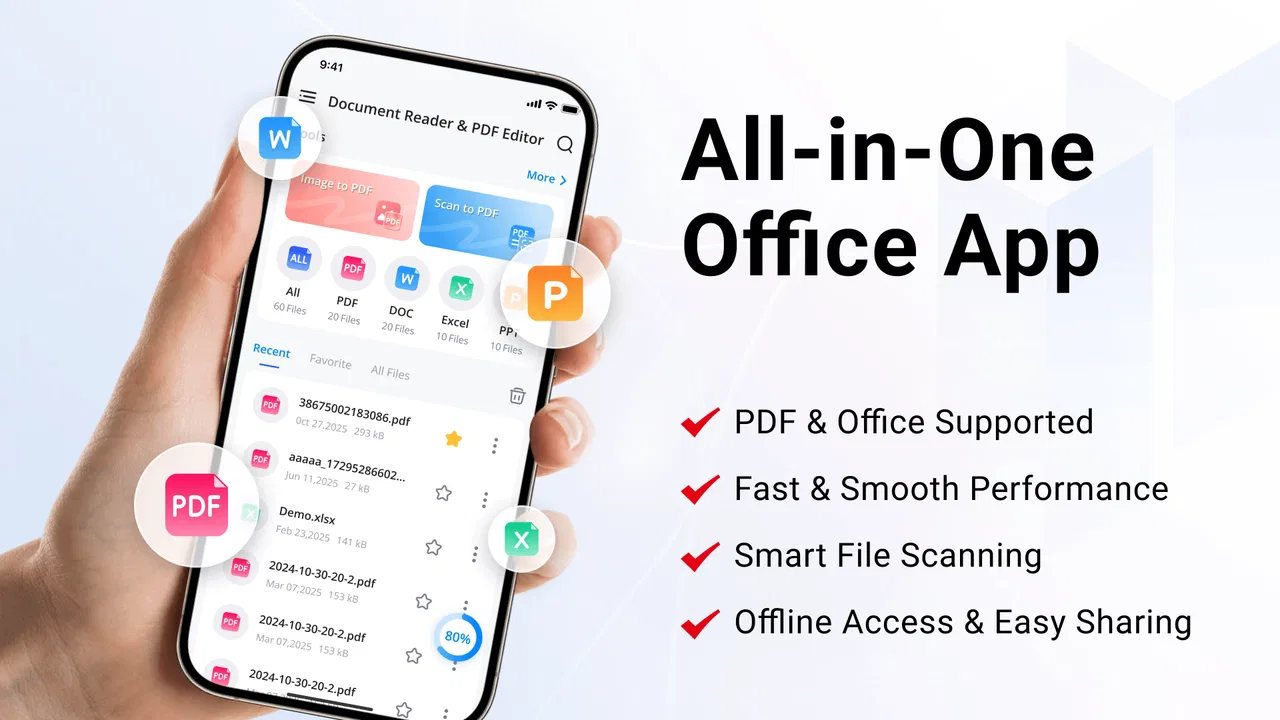
I would also check how the app presents files and whether the document list stays understandable after several files are opened. A clean list is valuable because it reduces the number of taps between receiving a file and reading it. If the interface makes recent documents easy to identify, I would use that as my main starting point. If it feels crowded, I would rely more heavily on orderly device folders instead of expecting the app to manage everything for me.
Another setting-related habit is to test a document that resembles my real workload. A short plain document can create false confidence. I would use one file with several pages, one with images, and one with a form-like layout. That small test reveals more than casually opening a single page because it shows whether navigation remains comfortable when the document becomes denser.
For editing, I would make a harmless copy first. This is especially important with an unfamiliar utility. I would preserve the original, open the duplicate, and try the action I actually need, such as adding or changing text if the document allows it. This workflow protects the source file and quickly shows whether the editor is suitable for precise changes or better treated as a basic convenience tool.
My strongest practical advice is to treat the original document as read-only until the app proves it can handle your file correctly. That is not a criticism unique to this product; it is a sensible safeguard whenever a phone app is being used for forms, applications, or documents that would be difficult to recreate.
Shortcuts and repeatable patterns that save time
Experienced use is less about tapping faster and more about removing unnecessary decisions. I would create a repeatable pattern: receive the file, place it in a recognizable folder, open it in the reader, inspect it, and work on a copy if editing is required. Once that process becomes automatic, the app’s value comes from reducing friction rather than providing a complicated workspace.
For documents I consult repeatedly, I would keep a dedicated folder instead of searching the entire phone each time. This is particularly useful for manuals, reference notes, class material, or household paperwork. A document reader becomes much more practical when it is paired with a predictable filing habit. Without that habit, even a simple task can turn into a hunt through downloads, messaging attachments, and duplicate files.
I would also use a two-pass reading method. On the first pass, I look for the document’s structure and identify the pages that matter. On the second, I return to those pages for closer reading or editing. This is more efficient than attempting to understand every paragraph while simultaneously trying to locate a specific detail. It works well on a phone because it limits the amount of repeated scrolling.
When editing is involved, I would make one change at a time and review the result immediately. Small-screen editing can make misplaced text or altered spacing easy to miss. A quick visual check after each meaningful change is safer than making a long series of edits and discovering at the end that the layout has shifted. I would then reopen the saved copy and inspect it again before sharing it.
There is also a useful trade-off between convenience and precision. A phone is excellent for urgent corrections, quick reviews, and simple paperwork while traveling. It is less comfortable for rebuilding a complex document, adjusting elaborate layouts, or performing careful formatting for a professional submission. I would use this app to finish small tasks away from a computer, not to replace a full desktop publishing or office workflow.
Where the editor reaches its practical limits
The name suggests both reading and editing, but I would not assume that an all-in-one label makes the app equivalent to a full PDF production suite. Reading a document and making a minor change are very different jobs. The former can be comfortable on a phone; the latter depends heavily on how the file was created and how much control the editor provides.
Complex files are the real test. Documents containing elaborate tables, unusual fonts, dense forms, or carefully positioned images may not behave as neatly on a mobile screen as they do on a computer. Even when the text appears correctly, the editing experience can become slow or imprecise because selecting a small area with a fingertip is harder than using a mouse or trackpad.
I would therefore avoid using it as my only tool for legally important or highly formatted documents unless I had already tested the exact workflow. For a contract, application, invoice, or official form, I would keep the source safe, verify every edited page, and use a computer when the layout must remain exact. The app is more convincing as a convenient mobile reader with editing capability than as a replacement for specialized professional software.
Another limitation is confidence. With an average of 2.6 from around a dozen ratings and only a handful of written reviews, there is not a broad public track record to lean on. That does not prove the app will fail, but it does make personal testing more important. I would begin with non-critical files and only expand my use after seeing how the app handles my own documents.
People who need collaboration, extensive cloud integration, advanced markup, optical character recognition, or sophisticated export controls may be happier with a larger established office or PDF platform. Those alternatives usually make more sense when documents are part of a team process or when precision matters more than simplicity. In contrast, this app has a clearer role for someone who wants a free, direct way to read documents on an Android device and occasionally make practical changes.
Who should use it, and who should skip it?
I would recommend trying it if your document needs are modest and mobile-first. Students checking course material, families opening downloaded paperwork, and workers reviewing files away from a desk may appreciate having a focused reader available. It can also suit someone with an older compatible Android phone who does not want to install a large productivity suite for occasional document tasks.
I would be more cautious if you regularly prepare polished business documents, handle sensitive paperwork, or depend on exact formatting. In those situations, the convenience of a free phone app may not compensate for the need to verify every page and preserve every layout detail. A desktop editor or a more established document platform is the better choice when editing is central rather than occasional.
iPhone users should also note the platform context before planning a workflow. This release is presented with Android compatibility beginning at version 8.0, so I would not choose it expecting the same experience across mobile operating systems. If your work moves between Android, iOS, Windows, and web tools, a cross-platform service may be a more practical long-term home for your files.
My verdict after settling into the workflow
After using it as a focused productivity app, I see Document Reader & PDF Editor as a modest tool with a sensible everyday purpose. Its strongest case is not replacing every document application; it is giving Android users a free way to open and handle documents without committing to a much larger suite. The combination of a simple routine, careful file organization, and cautious editing makes it more useful than the brief store summary suggests.
My recommendation is to start with ordinary, non-critical files and test the documents you actually receive. Check how comfortable navigation feels, whether the editor suits the changes you make, and whether saved copies preserve the layout you expect. If those tests go well, the app can become a handy part of a mobile paperwork routine.
For quick reading and occasional document adjustments, I would give it a fair trial; for complex, collaborative, or precision-heavy work, I would choose a more established alternative. That balanced position fits its small public review history and its straightforward role. It is best approached as a practical Android utility, not as a complete replacement for every professional PDF and office tool.
FAQs for Document Reader & PDF Editor
01What file formats does Document Reader & PDF Editor support?
Document Reader & PDF Editor supports a wide range of file formats, including PDF, DOCX, XLSX, PPTX, and TXT. This versatility allows users to view and edit documents across different formats without needing multiple apps, making it a convenient choice for professionals and students alike.
02Is Document Reader & PDF Editor available for both Android and iOS?
Yes, Document Reader & PDF Editor is available for both Android and iOS platforms. Users can download it from the Google Play Store or Apple App Store, ensuring compatibility with a wide variety of devices, whether you're using a smartphone or tablet.
03Does Document Reader & PDF Editor offer cloud storage integration?
The app integrates seamlessly with popular cloud storage services like Google Drive, Dropbox, and OneDrive. This feature allows users to easily access, edit, and save documents directly from their cloud accounts, ensuring data is always synchronized and accessible from any device.
04Are there any in-app purchases or subscription fees?
While Document Reader & PDF Editor offers a free version with basic features, there are in-app purchases and subscription options available. These provide access to advanced features such as enhanced editing tools, ad-free experience, and additional storage options, giving users more flexibility based on their needs.
05How user-friendly is Document Reader & PDF Editor for beginners?
The app is designed with a user-friendly interface that caters to both beginners and advanced users. It features intuitive navigation, easy-to-use editing tools, and quick access to recently opened files. New users can quickly get accustomed to its functionality without a steep learning curve.
Pros
- User-friendly interface for easy navigation.
- Supports a wide range of file formats.
- Efficient PDF editing capabilities.
- Offline access available for documents.
- Quick document conversion and sharing.
Cons
- Free version has limited features.
- Occasional ads can be distracting.
- Large files may slow down performance.
- Some features require in-app purchases.
- Limited cloud storage integration.

Document Reader & PDF Editor
Gallery